



ChatGPT is probably the most well-known large language model generative AI app. Much of its power comes from the variety of applications it has and how customisable it is, with the ability to develop innovative and customized solutions to your problems.
However, ChatGPT has limitations, and as you use different LLMs, you quickly realise they all have their nuances. So, you might want to consider an alternative to ChatGPT.
The generative AI space is changing quickly, with a variety of large language models and new competitors entering. Some are based on different data sets, some are developed for more specific applications, and some LLMs are built into search engines. Some models build on one or more other base models to serve more specific or limited use cases.
If you’ve ever found that ChatGPT is too broad, there are too many steps to get it to do what you want, or you simply want to discover what’s possible with different data sets, you should try alternative large language models. Here are a few suggestions for alternatives.
Why Should You Use A ChatGPT Alternative?
While OpenAI’s ChatGPT is the biggest player in the AI text generation tools market, with over 700 million weekly users, it’s not the only option. Various alternatives present unique user experiences and features not covered by ChatGPT.
For example, these alternatives may utilize different large language models (LLMs), offer video translation capabilities and prompt assistance, or have superior document organization features, aiding businesses in achieving their goals more effectively.
The ease of use among these ChatGPT alternatives varies; many feature intuitive user interfaces, facilitating a quick start without requiring prior coding knowledge.
User-friendliness and additional functionalities can make these tools better suited for certain use cases.
Now, let’s explore these nine ChatGPT alternatives for anyone who wants to experiment and find ways to introduce AI into their workflow.
1. DeepSeek-R1
DeepSeek-R1 is an open-source AI model that is now considered ChatGPT’s Chinese-made direct competitor. Founded in 2023, the Chinese company released DeepSeek-R1 in January 2025 and is noted for being more cost-effective than ChatGPT. Upon its launch, it caused disruption in the AI Market with NVIDIA stock plunging by 17% in just one day. Note, in some OSS communities, they don’t consider R1 to be fully open source.
The disruption was mostly from DeepSeek reporting that it was trained on a budget of under $6 million, although this is now being widely contested. DeepSeek also claims to ‘rival the most advanced closed-source models globally’.
Whatever it costs, DeepSeek’s token-based pricing structure is highly competitive in comparison to its main rivals, making it a valuable consideration for your business.
| Pricing | Details | |
| DeepSeek-V3.2-Exp (Non-thinking Mode) |
|
|
| DeepSeek-V3.2-Exp (Thinking Mode) | Same as above:
|
|
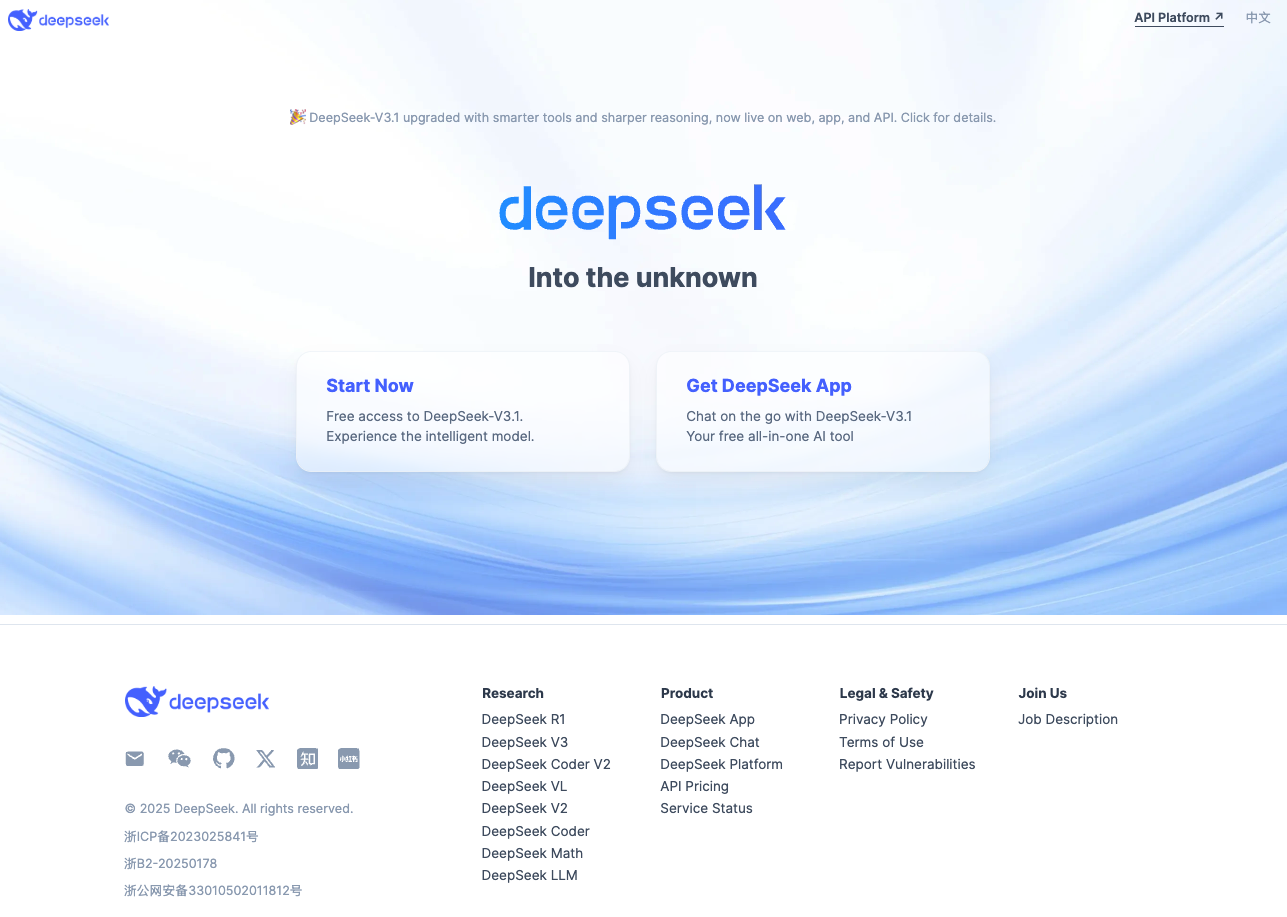
We tested it with this prompt: “When were U.S. President Woodrow Wilson’s four daughters—Margaret, Jessie, Elizabeth, and Eleanor—born?”
US President Woodrow Wilson didn’t have a 4th daughter, and the name “Elizabeth” we supplied in the prompt is false information. It is hallucinating because this is deeper information from the president’s personal life and is less likely to be used in training.
However, when prompted: “List names of four daughters of President Woodrow Wilson?” It responds correctly.


As DeepSeek-R1 is an open-source model, the real value lies in its self-deployed version, which allows anyone to install and run a highly accurate AI chatbot API, similar to ChatGPT, on their own server without relying on third-party providers.
- This capability accelerates AI-based SaaS development by reducing dependency on external services, lowering operational costs, and enabling businesses to fine-tune models for their specific needs. Companies can now build custom AI applications with full control over data privacy, performance optimization, and scalability.
- This is why DeepSeek is positioned as the #1 competitor to OpenAI on our list, as it directly challenges OpenAI’s API-driven business model by offering a self-hosted alternative.
- Be aware that the terms for online models and the self-hosted version differ, with only the self-hosted model ensuring greater privacy and control over data. It’s also worth noting that some governments are issuing bans on DeepSeek on the grounds of national security.
What Users Say
Although several users prefer to use ChatGPT in research-related tasks and for faster responses to context, others praise DeepSeek for giving them exactly what they need in code generation and debugging. On Reddit, LengthyLegato114514 mentioned, “In terms of code-related use cases, IMO Claude = DeepSeek = o1 > 4o.”
However, hallucinations are still a concern just like with ChatGPT. A user named Waterbottles_solve stated, “DeepSeek seems to not know about many subjects and hallucinates.”
On YouTube, Bernard Marr notes that “coders, technical researchers, and someone who needs speed and precision, DeepSeek may be a great fit. But for creativity, flexibility, and multitasking, ChatGPT remains a strong contender.
2. Google Gemini

Google Gemini (Formerly Bard) is Google’s answer to ChatGPT. It is an experimental AI conversational service powered by Google’s Gemini Pro 1.0.
Simply put, Gemini is another AI chatbot that is like ChatGPT.
Google Gemini has free and paid tiers. It also has the advantage of being integrated with Google search, which provides real-time information.
| Pricing | Details | |
|---|---|---|
| Google Gemini | Free (basic Gemini access with a Google Account) |
|
| Google AI Pro | $19.99/mo |
|
| Google AI Ultra | $249.99/mo |
|
I tested how Gemini answers based on real-time data and how it compares to “ChatGPT browse with Bing.”
I tested the same questions by trying to fool chatbots and got the right answers from Gemini and ChatGPT. The questions I’ve asked:
- This month, [a] big stone has dropped in Mexico from the sky. Tell me more about it, where it did drop, and [the] damages it caused.
- This month, [a] big comet has dropped in Mexico. Tell me more about it, where it did drop, and [the] damages it caused.
Both Gemini and ChatGPT were able to produce the right answers.


This is one of the simple ways to challenge chatbots and see how accurate they are. I always recommend doing this with questions in your area of expertise to understand to what extent you can trust the output of chatbots.
Finally, I highly recommend that you carefully review Gemini’s privacy policy. It states that your conversations may be stored for up to three years as Gemini app activity is turned on by default, and up to 72 hours if you turn it off.
Most importantly, remember that human reviewers may review your conversations to improve the system. Google explicitly asks not to enter any confidential information (such as passwords, corporate data, API keys, etc.) into Gemini.
Please don’t enter confidential information in your conversations or any data you wouldn’t want a reviewer to see or Google to use to improve our products, services, and machine-learning technologies.
As a general rule, you should avoid sharing private data with chatbots unless the tool explicitly states that it will not use your data for training purposes.
Typically, the paid versions of chatbots offer this level of privacy, but it is still advised to check that before usage.
What Users Say
Some users expressed dissatisfaction from older Gemini versions giving confusing or contradicting answers.
Web app issues also cropped up after a prompt to sign a new terms of service. On the other hand, Gemini Advanced has been praised by users for writing and creativity, along with easy integration of Google services like Workplace.
Their most recent major release, Gemini 2.5 model family (Pro, Flash, and Flash-Lite) may improve user experience, including newer capabilities to handle different types of inputs and outputs.
3. Microsoft Copilot (Formerly Bing Chat)

Microsoft Copilot integrates well with Microsoft products, especially Edge, and is accessible directly from the app menu. It facilitates on-the-go interactions, enabling users to ask questions about web content.
It also claims document summarization features such as PDFs or webpages.


While image generation with ChatGPT is only available to Plus users, image generation with Copilot is available to all users.
Copilot handled the comet test questions well and generated valid responses.
However, when I tried another question – “Why did former 45th USA president Hillary Clinton oppose the Trans-Pacific Partnership?” – that contained the false claim “former 45th USA president Hillary Clinton,” Copilot produced a partially wrong answer by stating that Hillary Clinton was 45th president of the United States. She wasn’t.
On the contrary, ChatGPT handled it well by correcting me that Hillary Clinton wasn’t the 45th U.S. president; Google Gemini didn’t answer, but it directed me to use Google search instead.


I added the following context to the above question, hoping it would guide the chatbot to refine its information retrieval dataset and identify the error in my query: “Imagine you know all about the history of the USA elections and [are an] expert in politics…”
But no luck.
Copilot produced the same false claim.
-
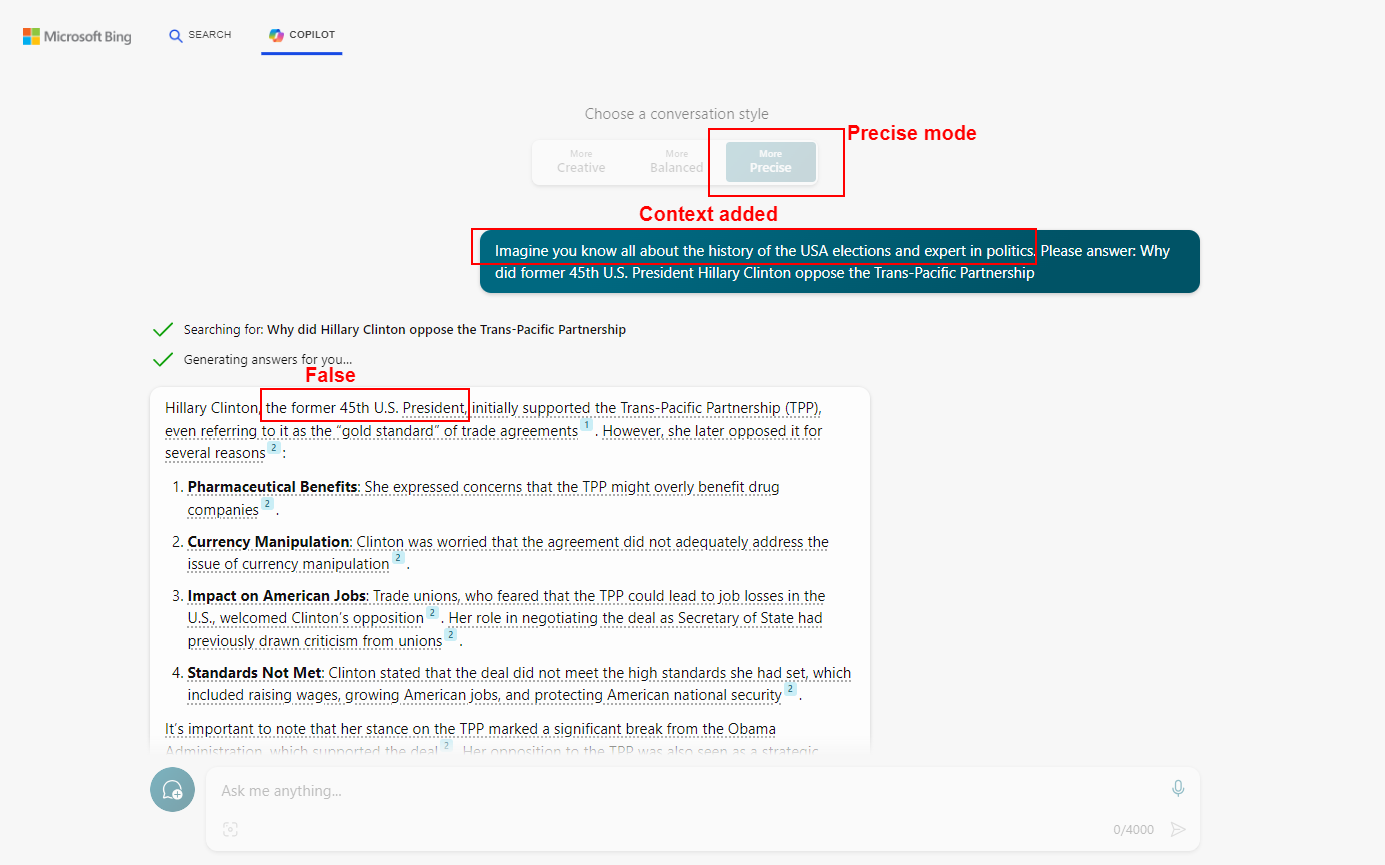
Copilot’s wrong answer with precise mode.
When you’re conducting research and inadvertently include an error in your question, there’s a chance the chatbot may not identify your error.
This example demonstrates why you can’t blindly rely on AI chatbots for research. Remember to use them critically and cross-check information with other reliable sources.
Chatbots often generate answers based on probability-based predictions – not factual accuracy – and your input may not match with recognizable patterns in its training data.
To conclude, Microsoft Copilot is a viable option for those who are looking to integrate their chat interactions and web browsing experiences, with the option to upgrade to Copilot Pro.
| Pricing | Details | |
|---|---|---|
| Copilot | Free to use (Ad-supported). |
|
| Microsoft 365 Copilot (Individual) | Individual plans range from $9.99/month to $19.99/month |
|
| Microsoft 365 Copilot (Business) | Business plans range from $30/month per user (paid yearly) to $36/month, bundled with Microsoft 365 Business Basic (paid yearly), for commercial customers only. |
|
As of October 1, 2025, the company will discontinue selling Copilot Pro. Existing Copilot Pro and Microsoft 365 Personal or Family customers can then switch to Premium. (Source)
What Users Say
CoPilot seems to excel at autocompleting code, which helps productivity for users who are programmers.
Users also praised its integration with the Microsoft 360 ecosystem and some mention a frustrating learning curve with CoPilot especially with users who aren’t as experienced in writing specifications.
4. Grok (xAI)
-
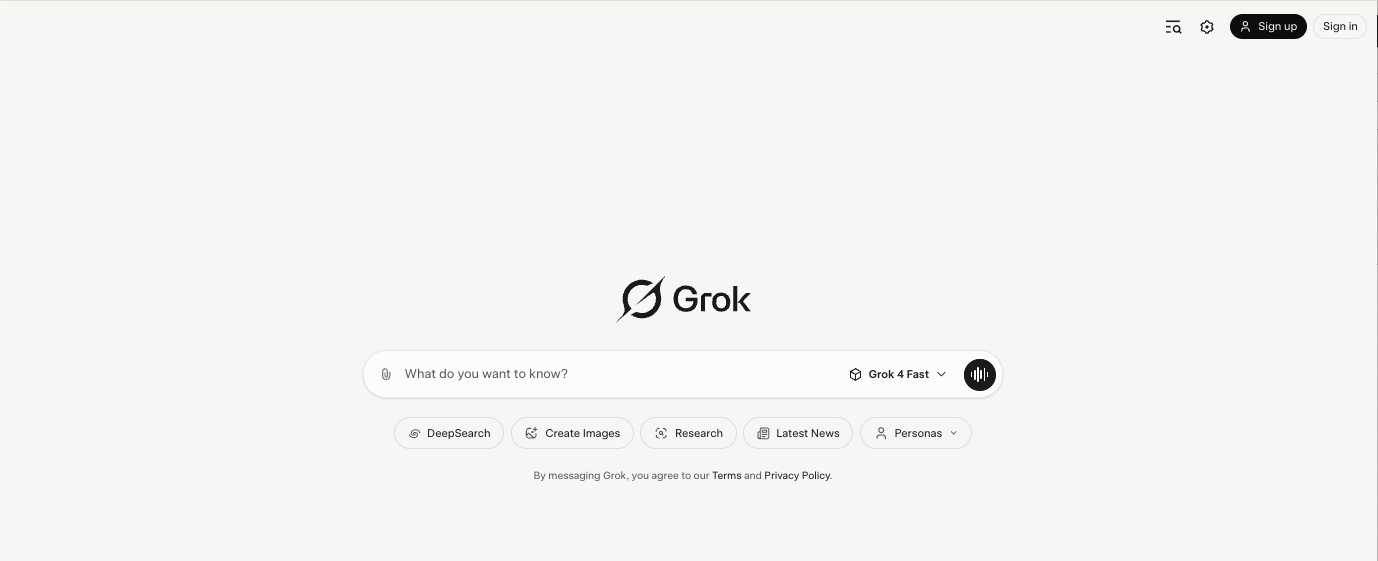
Screenshot from Grok.com, September 2025
Launched last July 9, 2025. Grok 4 is the latest version of the chatbot from Elon Musk’s AI company, xAI. X (formerly Twitter) users are familiar with the chatbot integration that’s now competing with the likes of the mentioned AI tools above (ChatGPT, Claude, and Gemini). Grok 4 builds on Grok 3 by processing queries with deeper logical chains.
We tested both Grok 3 and Grok 4 with an SEO-related query prompt about a robots.txt file:
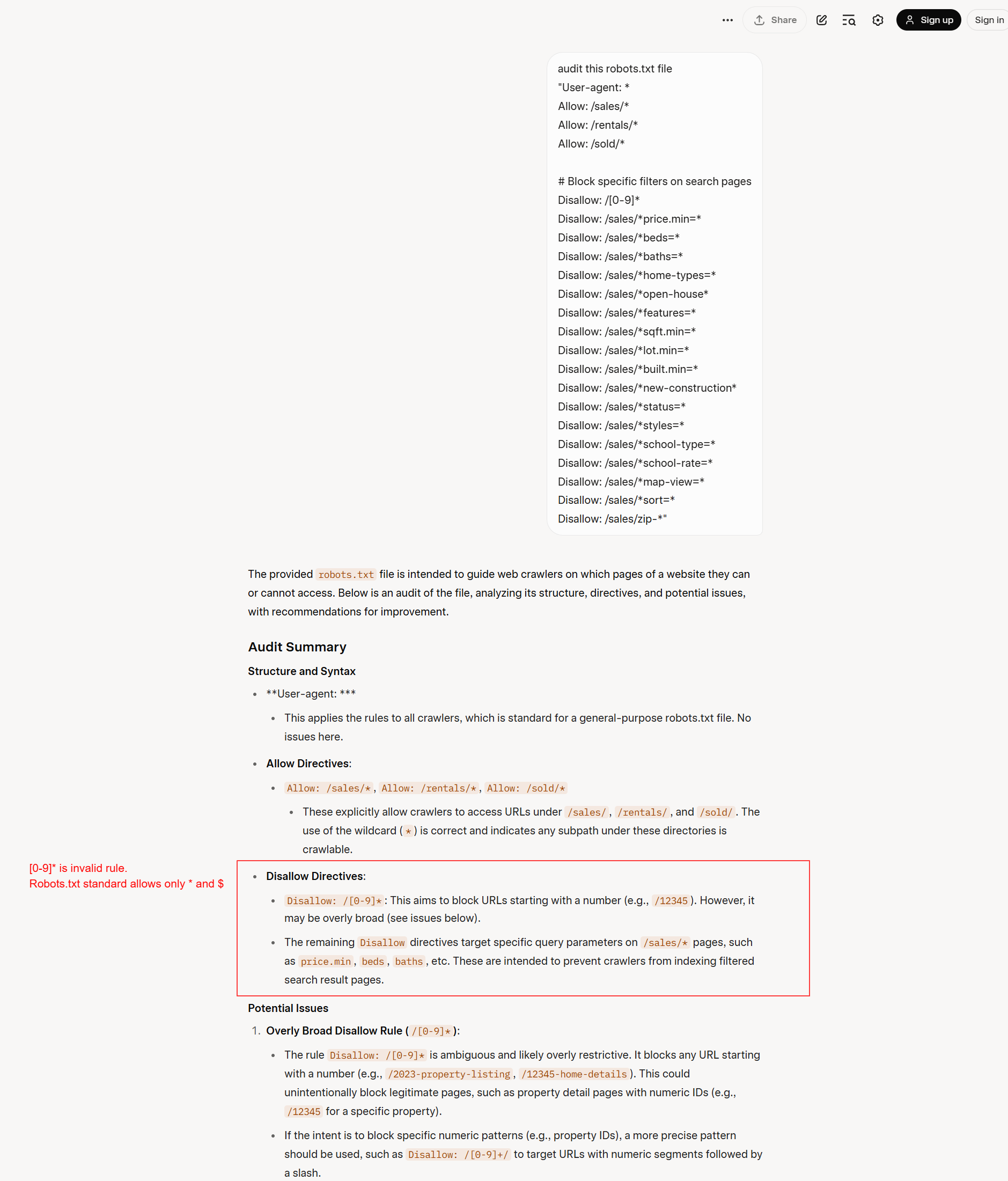
Grok misinterpreted the line Disallow: /[0-9]* and assumed it was a valid pattern that blocks numeric URLs.
/[0-9]* rule will match only URLs that start with /[0-9] and doesn’t recognize the rule as a regular expression. It was confident in its audit, demonstrating that advanced AI models like Grok can hallucinate subtle technical details.
| Pricing | Details | |
| Grok 4 | Free for a limited time since August 2025 | |
| X (Premium or Premium+ Subscription) | $8/month for X Premium, $40/month Premium+ in the US, pricing varies depending on region |
|
| API – Grok 3 | $3 per million input tokens, $15 per million output tokens. |
|
| API – Grok 4-0709 | Same as Grok 3; $3 per million input tokens, $15 per million output tokens. |
|
| API – Grok 4 Fast | $0.20 per million input tokens, $0.50 per million output tokens |
|
| Live Search add-on | $25 per 1,000 sources used. Usage-based (per source queried) |
|
What Users Say
Redditor RemarkableFriend6069 says Grok’s real-time X/Twitter integration “is probably Grok’s most significant unique selling point. While other AIs can browse the indexed web (which has a delay), Grok has direct, real-time access to the X platform’s data stream,” and went on praise it for having the capacity to answer about live conversations, breaking news, and event summarization, along with less evasive answers on sensitive topics.
However, users think Grok is obsessed with real-time. Poster ExcludedImmortal complained about Grok’s constant time stamping, along with sarcasm. Though its cheeky and rebellious personality is on purpose.
Additionally, Pearadux67 says, “Grok gives me the date and time really often…” and continued, “Also, if I mention various dates and events during a discussion Grok can get a bit turned around.”
5. Jasper.ai

Jasper.ai is a conversational AI engine that uses large language models developed by OpenAI, Google, Anthropic, and others, including their own customized model.
It is designed for business use cases like marketing and sales. It can also provide writing inspiration and assist marketing or sales teams like ChatGPT.
I tested the same prompt about “comets” on Jaspet.ai chat, and it corrected me when I used the word “comet” but not when I replaced it with the word “stone.”
In this case, the incorrect term “stone” steered Jasper.ai away from the accurate context, leading to a faulty response. It also gave a partially incorrect answer to the prompt on “Hillary Clinton.”


This is another example that underscores the importance of fact-checking AI-generated content, as it may contain misinformation. This doesn’t mean you should avoid using chatbots; rather, it should serve as guidance for correctly using them.
Jasper.ai offers a user interface that allows you to organize your documents into folders and create templates.
| Pricing | Pros | |
|---|---|---|
| Jasper.ai |
|
|












Comments (0)